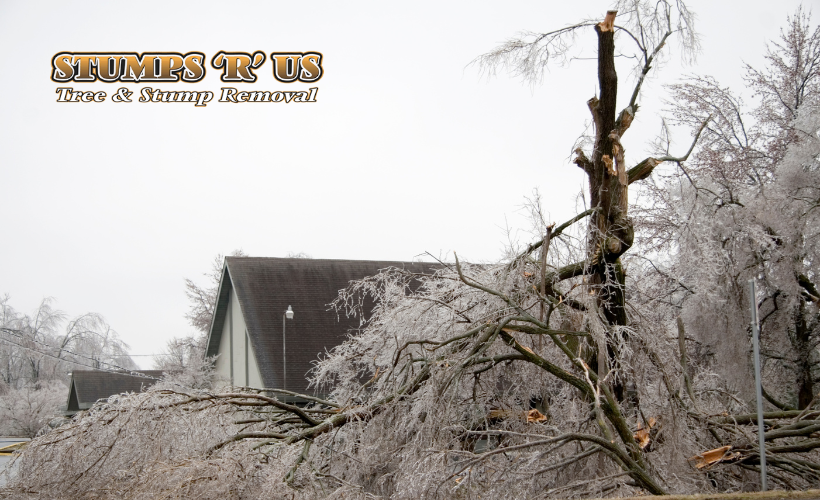
Ice storms damage thousands of trees across Ontario each winter. Snow and ice weigh down tree branches until they crack, split, or snap onto homes, vehicles, and power lines. Homeowners in St. Thomas and Middlesex County deal with this threat every year. Falling limbs cause property damage and personal injury when left unchecked. Stumps ‘R’ Us provides emergency tree removal, storm damage cleanup, and professional tree care across London and the surrounding area. This guide explains how to stay safe, assess damage, care for injured trees, know when to call an arborist, and prevent future damage.
Immediate Safety After an Ice Storm
Stay away from damaged trees after an ice storm. Broken limbs fall without warning for 24 to 48 hours after the storm ends. Avoid walking under trees with hanging branches, split limbs, or thick ice buildup. Contact a tree removal expert immediately.
Stay Clear of Power Lines
Fallen tree branches bring down power lines every winter. Contact your local utility provider right away if any tree touches or leans toward a power line. Stumps ‘R’ Us works with utility crews in St. Thomas and Middlesex County to clear hazardous trees near electrical lines. Never try to cut or move a tree near a power line yourself. Homeowners risk serious personal injury around downed lines and unstable trees without professional equipment.
Let Ice Melt on Its Own
Many homeowners try to knock ice off branches with poles or brooms. This sudden force snaps limbs that are already under stress. Ice makes wood brittle, so shaking a branch often breaks it. Forests Canada confirms that striking ice-covered branches with blunt objects causes more breakage than the ice itself. Leave branches alone and let the ice thaw at its own pace.
How to Assess Ice Storm Damage
Check your trees only after conditions are safe. Walk around each tree and look at damage from top to bottom. The initial health of a tree before the storm plays a major role in recovery. Watch for 5 types of damage: broken branches, bent trunks, split main stems, uprooted trees, and root damage from soil heaving.
Broken Branches and Tree Canopy Loss
Trees that lose less than 50 percent of their tree canopy often survive with proper pruning. Trees that lose more than half their canopy face longer recovery times. Results vary by species. Slower-growing hardwoods like native maples and oaks bounce back better than fast-growing birches and poplars. Damaged branches still hanging in the crown create hazards that grow worse over time.
Bent Trees and Leaning Trunks
A stem bent less than 60 degrees has a good chance of standing upright again. A bend past 60 degrees lowers survival odds and may need professional staking or removal. Young trees bent by ice often straighten once the weight melts. Larger trees that lean 10 degrees or more beyond their original position have weakened root systems. These trees need immediate evaluation from an ISA-certified arborist.
Split Trunks and Bark Damage
A trunk split is one of the most dangerous results of ice storm damage. Split trees fall without warning in any direction. Bark loss that covers more than one-third of the trunk circumference usually means the tree cannot be saved. Stumps ‘R’ Us provides same-day emergency assessments for split, uprooted, and hazardous trees across St. Thomas, London, and all of Middlesex County.
Tree Care and Recovery After Ice Damage
Good care after an ice storm gives injured trees the best chance at survival. Focus on 3 actions: corrective pruning, proper timing, and avoiding common mistakes.
Corrective Pruning for Storm-Damaged Trees
Cut broken branches just outside the branch collar. The branch collar is the raised ring where the branch meets the trunk. A clean cut at this spot helps the tree heal faster. Use hand saws for branches under 2 inches and chainsaws for larger limbs. For young conifers with snapped tops, cut just above the first live whorl of branches. This lets a healthy side branch grow into the new central leader. Corrective pruning also restores balance to lopsided crowns after heavy limb loss.
When to Prune
Remove hanging or dangerous branches as soon as conditions are safe. For everything else, wait until the growing season between spring bud burst and fall bud set. Do not prune oaks from April through August. Open wounds during warm months spread oak wilt, a fatal fungal disease carried to fresh cuts by sap-feeding beetles. There is no rush to remove trees that pose no immediate safety risk.
Mistakes That Harm Recovery
Do not apply wound dressing, paint, tar, or any sealer to pruning cuts. These products block the tree’s natural healing response and trap moisture that causes decay. Do not top trees by blunt-cutting main limbs. Topping destroys central leaders and forces weak regrowth that breaks easily in the next storm. Leave enough branches on the tree. Damaged trees need their remaining leaves to produce energy for recovery.
When to Call a Professional Arborist
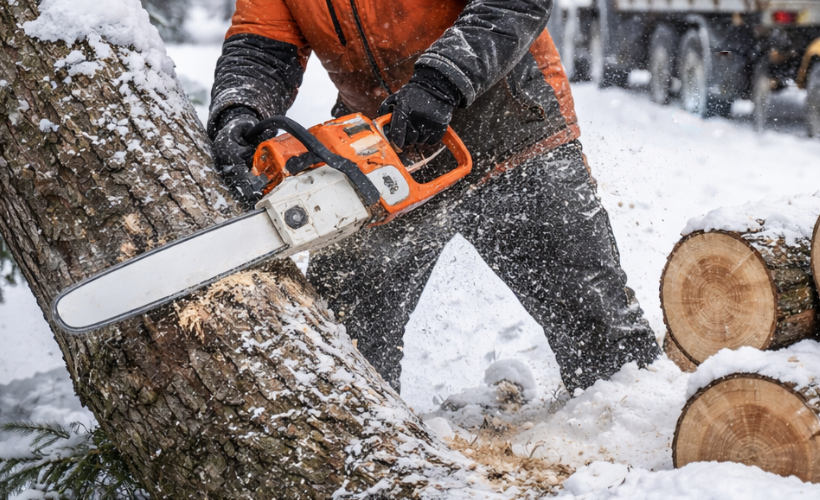
Some ice storm damage requires equipment and training that homeowners do not have. Call an ISA-certified arborist when the tree hangs over your home, power lines, or driveway; the trunk is severely split; large branches hang broken in the canopy; the tree leans much more than before the storm; or you cannot reach the damage safely from the ground. A qualified arborist can also spot oak wilt and other diseases that spread faster through storm wounds.
Stumps ‘R’ Us is a fully insured tree service company based in St. Thomas, Ontario. Our arborist team responds immediately to ice storm emergencies across Middlesex County. We handle tree removal, hazardous branch cleanup, stump grinding, and storm damage assessment. Call or text 519-854-8991 for immediate response.
Watch Out for Storm Chasers
Unlicensed operators go door-to-door after major ice storms and offer cheap tree work. Many lack proper insurance, training, and equipment. Bad tree work leads to long-term structural problems and safety hazards. Verify that your tree service carries liability insurance and holds credentials through the International Society of Arboriculture. Check your local community guidelines for bylaws that apply to tree removal on your property. Stumps ‘R’ Us is insured, experienced, and locally owned in St. Thomas. We know the trees, soil, and weather patterns specific to Middlesex County and London.
How to Prevent Future Ice Storm Damage
Proactive tree care cuts the risk of severe storm damage. Trees with strong structure, balanced crowns, and healthy roots handle ice loads far better than neglected trees.
Regular Pruning and Inspection
Schedule professional pruning every 3 to 5 years to remove dead wood, weak branches, and competing leaders. Crown thinning reduces the surface area where ice collects. Structural pruning builds stronger branch attachments by promoting U-shaped unions and removing weak V-shaped crotches with included bark. Young trees gain the most from early pruning because small corrections prevent large failures later.
Choose Storm-Resistant Species
Pick species that resist ice damage when you plant new trees. Native oaks, sugar maples, white pine, and white spruce handle Ontario winters better than willows, silver maples, and Bradford pears. Fast-growing species produce soft wood and weak branch joints. Slower-growing hardwoods build dense grain that supports heavier ice loads. Stumps ‘R’ Us can recommend the right species for your St. Thomas or Middlesex County property based on soil type, sun exposure, and distance from structures.
Protect Your Property and Trees This Winter
Ice storm tree damage threatens homes, vehicles, and personal safety across Ontario every winter. Quick action, proper pruning, and professional help protect your trees and property. Stumps ‘R’ Us serves St. Thomas, London, and all of Middlesex County with emergency tree removal, stump grinding, storm cleanup, and preventive tree care. Our certified arborist team provides free estimates and immediate emergency response.

Call or text Stumps ‘R’ Us today at 519-854-8991. We are reliable, affordable, insured, and ready to help you recover from ice storm damage or prepare your trees before the next winter storm.