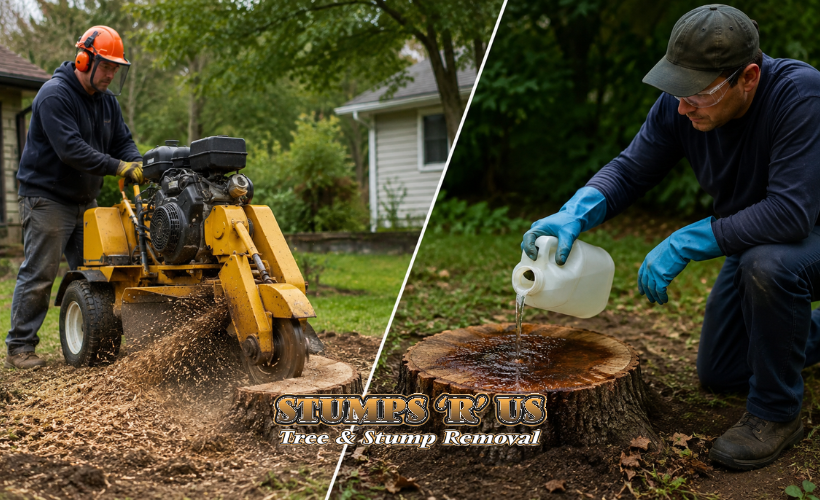
A tree stump often stays behind after tree removal. It wastes yard space, trips people, and draws pests like termites and carpenter ants. To clear it, you have one main choice: Stump Grinding vs Chemical Removal. Grinding uses a machine to shred the stump fast. Chemical removal uses a treatment to rot the wood slowly. This guide explains how each method works, what it costs, and how to pick the right one for your yard, your schedule, and your budget.
What Is Stump Grinding?
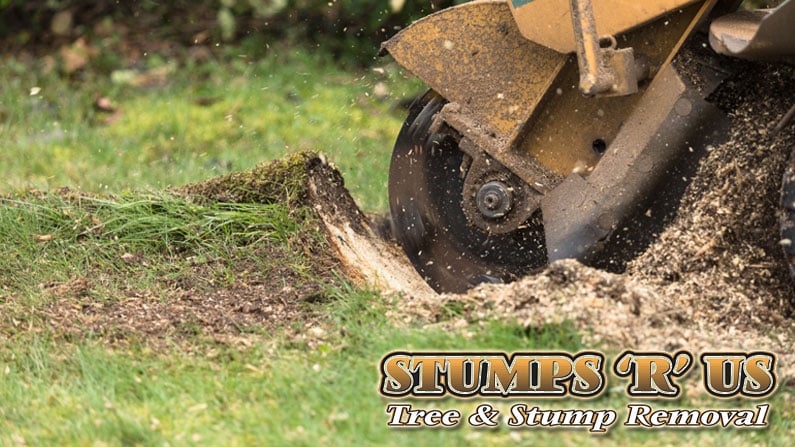
Stump grinding is a fast, machine-based method. A heavy stump grinder cuts the wood 6 to 18 inches below ground level. The spinning blade turns the stump into small chips in minutes. When the job ends, the ground sits flat with your lawn. You can then plant grass, lay sod, or start a new project right away. Grinding usually happens after tree removal, once the trunk and branches are gone. Most people pick grinding because it clears the stump in a single visit.
The process is quick and clean. Trained arborists move the stump grinder over the stump in slow passes. Each pass cuts deeper until the wood drops below the soil line. The crew then fills the large hole with wood chips or fresh soil. A small or medium stump often takes under an hour. This speed makes grinding the best choice when you need the stump gone soon.
Benefits of Stump Grinding
Grinding gives you fast, practical results:
- Removes tripping hazards at once
- Stops the stump from growing back
- Turns the wood into free landscape mulch
- Leaves your lawn and soil mostly intact
Drawbacks of Stump Grinding
Grinding has a few downsides. The machine is heavy, loud, and hard to move. You must rent a stump grinder or hire a pro, which adds cost. Prices usually run from $100 to $400 or more, based on stump size and location. Bigger stumps and tight spaces raise the price. Grinding also leaves the deep roots in the ground, so the buried wood still rots over time.
What Is Chemical Stump Removal?
Chemical stump removal is a slow, low-effort method. You drill deep holes into the top of the stump. You fill the holes with a chemical accelerant, usually potassium nitrate. The chemical makes the wood rot faster than it would on its own. Over 6 to 12 months or more, the stump grows soft and falls apart. You then pull out the rotted wood or let it break down into the soil. This method suits people who want to skip machines and save money. However… Both the environmental impacts and what you are doing to the ground matter.
The setup takes just one afternoon. You drill a grid of holes across the top and sides of the stump. You pour the accelerant into each hole and add water to start the reaction. Some people cover the stump with a tarp to hold in moisture and speed the rot. After that, the stump needs no daily care. You wait and check the wood every few months as it softens.
Benefits of Chemical Stump Removal
The chemical route trades time for savings:
- Costs less than professional grinding
- Needs no heavy machinery or stump grinding gear
- Takes little physical effort after setup
- Works as a slow, do-it-yourself project
Drawbacks of Chemical Stump Removal
Chemical removal has clear limits. The process is slow, and a hardwood stump can resist rot for years. It often leaves a stubborn, half-rotted root system in the ground. The chemicals also soak into your soil, which can harm nearby grass and plants, or also leak into water supplies. In many cases, you still have to dig out or grind the leftover wood, which adds the extra step you hoped to avoid.
Key Factors to Consider
Three things decide the best method for your project. Check each one before you choose.
- Time: Grind the stump if you plan to lay sod, build a deck, or plant a garden soon. Grinding clears the space in one visit, while chemical removal makes you wait months.
- Budget: Use chemical removal if you want to save money and can wait. It skips rental fees and professional costs.
- Tree type: Hardwoods like oak and hickory rot slowly. Softwoods like pine rot faster. Chemical removal rarely works well on hardwood without a long wait.
A Quick Side-by-Side Comparison
Grinding wins on speed. It gives you a usable yard the same day. Chemical removal wins on price, but it tests your patience for months. Grinding fits busy owners and landscape projects with firm deadlines. Chemical removal fits tight budgets and stumps you can ignore for a while. Your soil, tree type, and future plans all shape the right pick. Want a finished yard now? Choose grinding. Care more about cost than speed? Choose chemicals.
How Much Does Stump Removal Cost?
Cost often decides the winner. Chemical removal is cheaper up front. A container of potassium nitrate costs only a few dollars at most hardware stores, and you supply the labour yourself. Grinding costs more because you pay for the stump grinder and the skill to run it. Professional grinding usually runs $100 to $400 per stump, and large or clustered stumps cost more. The final price depends on the stump width, the root system, and how easily the machine reaches the spot. Many tree removal crews also offer grinding as an add-on service.
Think about hidden costs too. Chemical removal looks cheap, but it can force a second job if the roots refuse to rot. Grinding costs more today, yet it clears the stump in one visit and saves you months of waiting. For many owners, the faster result is worth the higher price.
What Happens to the Space Afterward?
Your plans for the space matter as much as the method. After tree removal, grinding leaves loose wood chips and level ground, so you can seed grass, lay sod, build a patio, or landscape the area within days. Chemical removal leaves a slowly rotting stump that you cannot cover or plant over until the wood breaks down. If you want a garden bed, a play area, or a new tree in the same spot, grinding gives you a clean start much sooner.
Safety and Cleanup Notes
Both methods carry some risk to people, pets, and property. Follow these basic safety steps on site:
- Wear eye and ear protection when you run a stump grinder
- Keep children and pets away from any chemical-treated stump
- Store chemical accelerants in a sealed, clearly labelled container
- Fill the ground hole after grinding to prevent trips and falls
Professional arborists handle these steps for you and haul away the debris. That saves you cleanup time and lowers your risk of injury.
Get the Right Stump Solution for Your Property
Your choice in Stump Grinding vs Chemical Removal comes down to time, budget, and tree type. Need fast results? Grinding is the answer. Have a small budget and an open schedule? Chemicals will do the job. If you feel unsure, certified arborists can inspect your stump, measure the roots, and suggest the safest option. Stumps R Us offers full tree removal and expert stump grinding, and helps property owners clear their yard the right way.

Contact Joe today to book your stump assessment and take back your outdoor space.